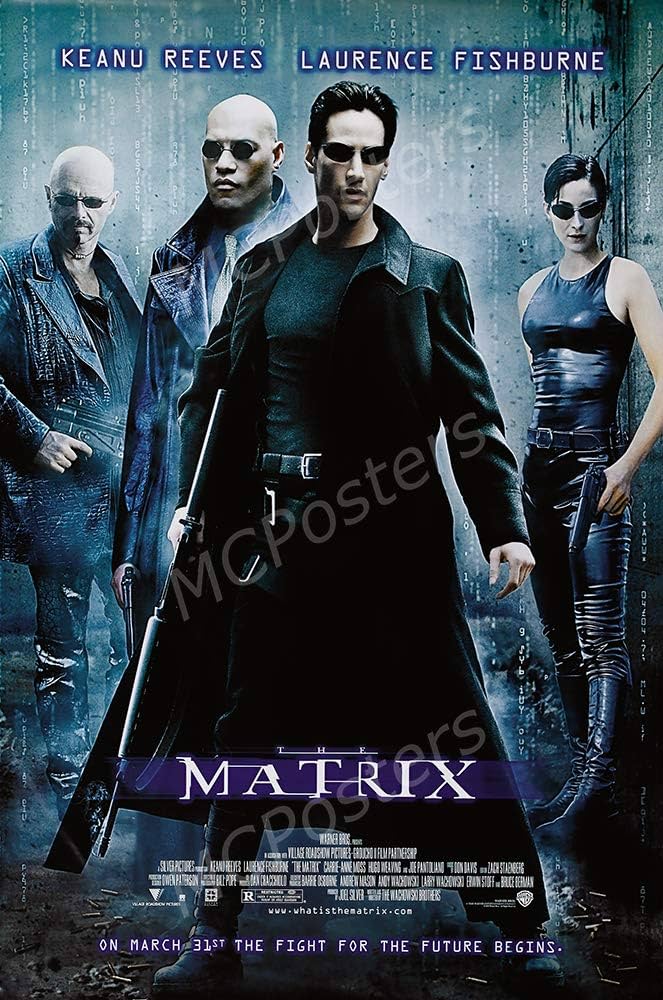
The Matrix (1999) Movie Poster
Synopsis of "The Matrix"
Introduction
"The Matrix" is a science fiction film that explores the concept of reality and the nature of human existence. The story follows Thomas Anderson, a computer programmer who goes by the hacker alias "Neo," as he discovers that the world he knows is actually a simulated reality called the Matrix, created by sentient machines to subdue the human population while using their bodies as an energy source.
Plot Summary
The Discovery
The film begins with Trinity, a mysterious hacker, escaping from Agents - powerful sentient programs that patrol the Matrix. Meanwhile, Thomas Anderson (Neo) is living a double life as a computer programmer by day and a hacker by night. He's searching for answers about something called "the Matrix" and a man named Morpheus.
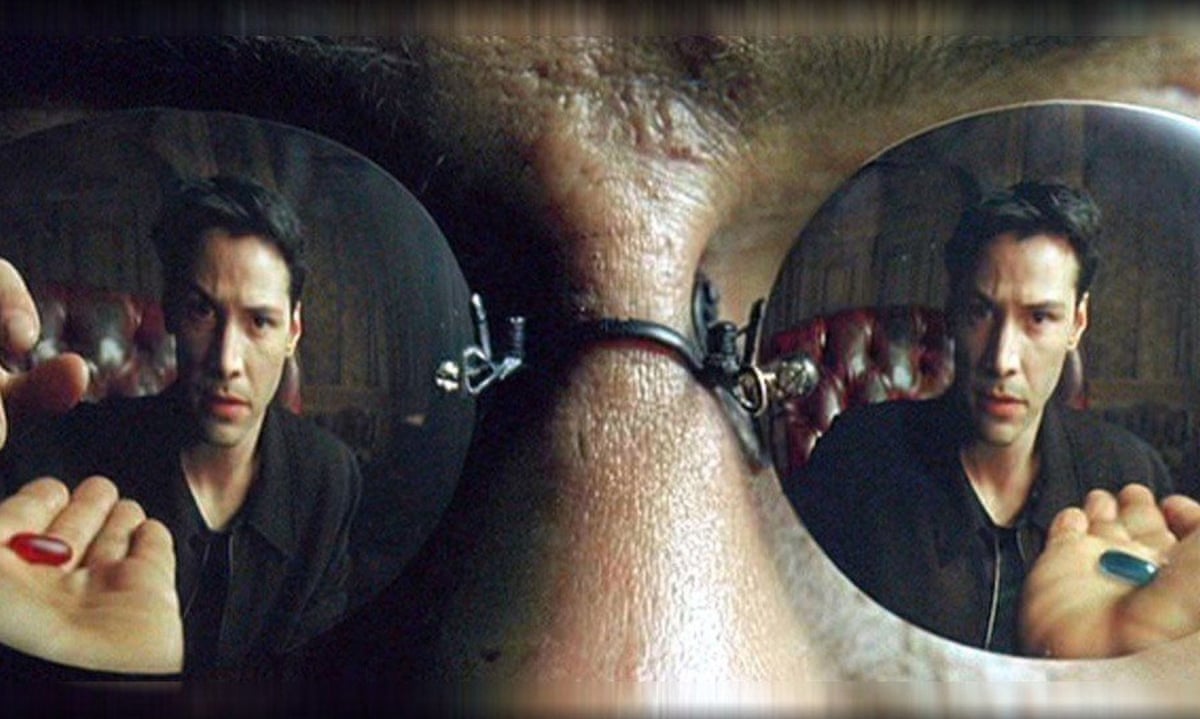
Neo is contacted by Morpheus, a legendary hacker who offers him the truth about the Matrix. Neo meets Morpheus in person and is given a choice between a blue pill (which would allow him to return to his old life) and a red pill (which would show him the truth). Neo chooses the red pill.
Neo discovers that what he believed to be reality is actually a computer simulation called the Matrix, and that the real world is a devastated landscape where humans are harvested for energy by machines. Morpheus explains that Neo has been freed because he believes Neo is "The One," a prophesied individual who can manipulate the Matrix and defeat the machines.
Training and Revelations
Aboard Morpheus's ship, the Nebuchadnezzar, Neo undergoes training programs to learn about the nature of the Matrix and how to bend its rules. He learns various skills, including martial arts, through direct downloads to his brain. Despite his training, Neo struggles with the belief that he is "The One."
The crew takes Neo to meet the Oracle, a program within the Matrix who has the gift of prophecy. The Oracle suggests to Neo that he is not "The One" and that he will have to make a choice between his own life and Morpheus's.
Meanwhile, one of the crew members, Cypher, betrays the group out of a desire to return to the blissful ignorance of the Matrix. He makes a deal with Agent Smith to surrender Morpheus, who has access codes to Zion, the last human city.
Rescue and Transformation
Cypher's betrayal leads to the capture of Morpheus by the Agents. Despite the Oracle's prediction, Neo decides to re-enter the Matrix to rescue Morpheus, believing that he cannot be "The One" but can still fight to save his friend. Trinity joins him in this dangerous mission.
In a daring rescue operation, Neo and Trinity manage to free Morpheus. As they attempt to escape, Neo faces Agent Smith in combat. Although Neo fights impressively, he is ultimately killed by Smith. However, Trinity, who has been told by the Oracle that she would fall in love with "The One," whispers to Neo's lifeless body that he cannot be dead because she loves him.
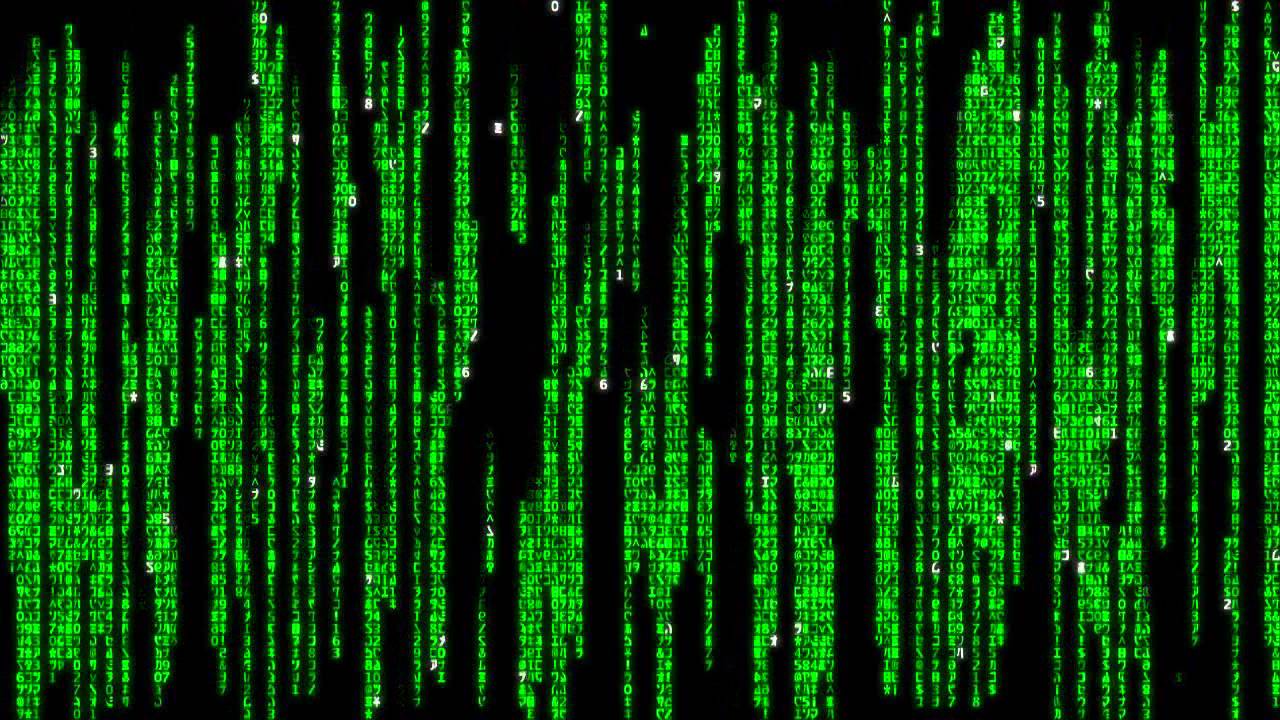
Neo resurrects within the Matrix, now fully believing in his abilities as "The One." He perceives the Matrix as it truly is - streams of code - and effortlessly defeats the Agents. The film ends with Neo making a phone call within the Matrix, promising the machines that he will show people "a world without rules and controls, without borders or boundaries; a world where anything is possible."
Themes
"The Matrix" explores several philosophical themes:
-
Reality vs. Illusion: The film questions the nature of reality and how we perceive it, drawing on concepts like Plato's Cave allegory and simulation theory.
-
Free Will vs. Determinism: Characters constantly grapple with choices and whether they are truly free to make them, or if everything is predetermined.
-
Humanity vs. Technology: The story presents a future where humanity's creation (AI) has turned against its creators, raising questions about our relationship with technology.
-
Rebirth and Messianic Narrative: Neo's journey follows the classic hero's journey, with clear parallels to messianic figures in various religions.
-
Control and Rebellion: The Matrix represents systems of control, while the human resistance symbolizes the fight against oppressive structures.
The film combines these philosophical concepts with groundbreaking visual effects and action sequences, creating a unique cinematic experience that challenges viewers to question their own perception of reality.